Geoengineering &
Climate Engineering
A comprehensive exploration of planetary-scale interventions, sustainability challenges, and the future of climate risk management
Introduction
As the global community grapples with the escalating impacts of climate change and the insufficiency of current mitigation efforts, interest in large-scale technological interventions to counteract global warming has grown significantly. These interventions, collectively known as geoengineering or climate engineering, are defined as the deliberate large-scale manipulation of the planetary environment to counteract anthropogenic climate change.
Geoengineering proposals are broadly categorized into two main approaches: Carbon Dioxide Removal (CDR), which aims to remove CO₂ from the atmosphere, and Solar Radiation Management (SRM), which seeks to reflect a small percentage of sunlight back into space.
Carbon Dioxide Removal
Addressing the root cause of climate change
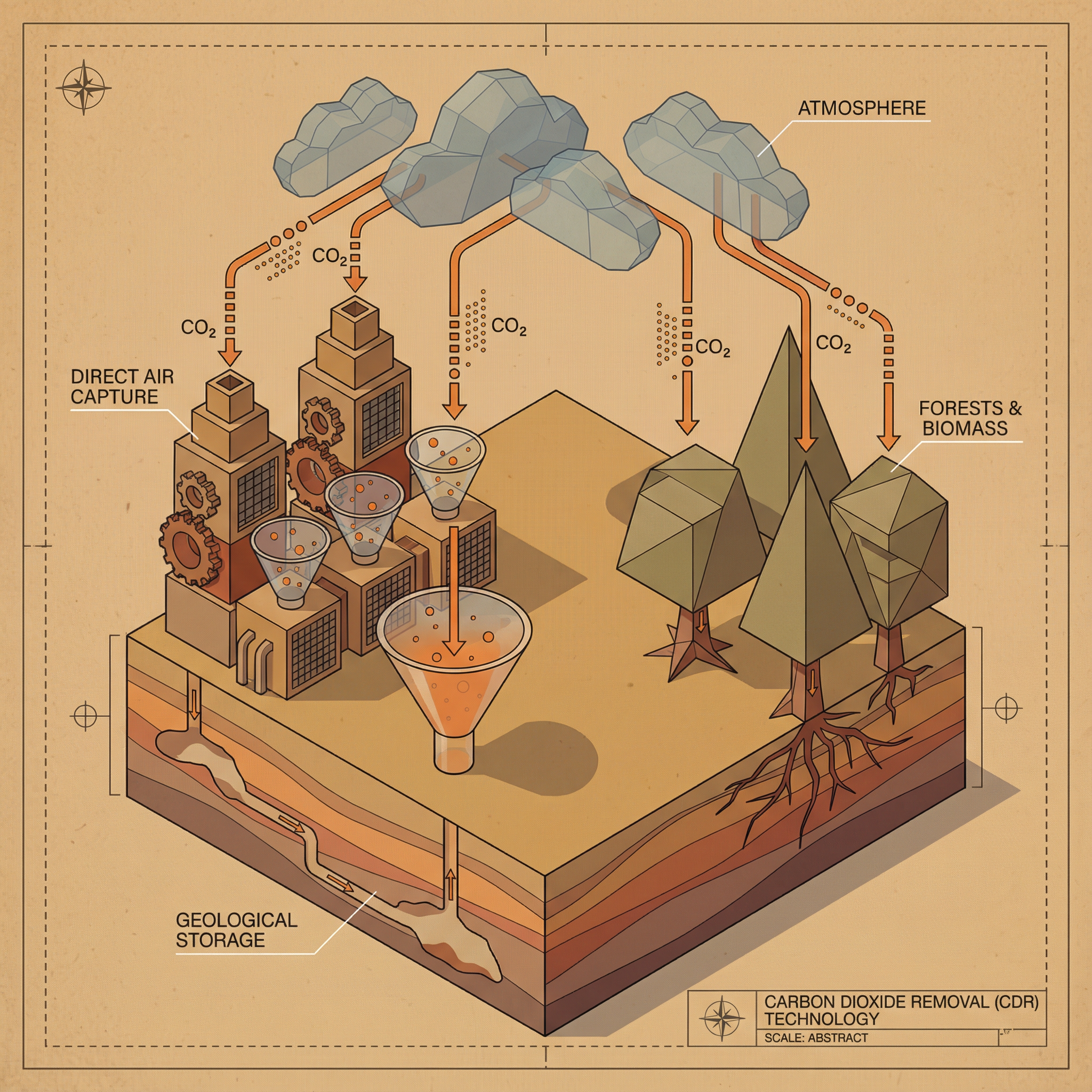
Carbon Dioxide Removal encompasses a range of techniques designed to extract CO₂ from the atmosphere and store it in durable reservoirs, thereby addressing the root cause of climate change—the accumulation of greenhouse gases. The IPCC estimates that 7-9 gigatonnes of CO₂ removal will be required annually by 2050 to meet the climate targets of the Paris Agreement.
Key CDR Techniques
- Uses chemical solvents or solid sorbents to capture CO₂
- Captured CO₂ can be stored underground or used in products
- Currently expensive ($600-$1000 per tonne) but costs declining
- Scalability limited by energy requirements and land use
- Combines renewable energy production with carbon removal
- Requires significant land area for biomass cultivation
- Competes with food production and biodiversity
- Net carbon removal depends on full lifecycle analysis
- Spreading crushed silicate rocks on land or in oceans
- Mimics natural geological carbon cycle at faster pace
- Potential co-benefits for soil health and ocean alkalinity
- Long-term environmental impacts require more research
- Adds minerals to seawater to enhance CO₂ absorption
- Could help counteract ocean acidification
- Potential ecosystem impacts poorly understood
- Requires large-scale mineral processing infrastructure
Challenges & Limitations
Solar Radiation Management
Reflecting sunlight to cool the planet

Solar Radiation Management techniques aim to reflect a small percentage of incoming solar radiation back into space, thereby cooling the planet. Unlike CDR, SRM does not address the root cause of climate change but rather treats its symptoms by counteracting the warming effects of greenhouse gases.
Key SRM Techniques
- Mimics natural cooling effect of volcanic eruptions
- Could potentially cool planet within months
- Requires continuous deployment to maintain effect
- Most studied and theoretically feasible SRM approach
- Uses salt particles to make clouds more reflective
- More localized and potentially reversible than SAI
- Effects on regional weather patterns uncertain
- Requires fleet of specialized vessels for deployment
- Aims to reduce warming effect of cirrus clouds
- Could allow more heat to escape to space
- Highly uncertain effectiveness and side effects
- Requires aircraft-based deployment at high altitudes
- Theoretical approach with no current technology
- Would require massive space infrastructure
- Extremely high costs and engineering challenges
- Potentially more controllable than atmospheric methods
Risks & Concerns
Termination Shock
If SRM deployment were suddenly stopped, global temperatures could rise rapidly to levels that would have been reached without SRM, potentially causing catastrophic impacts on ecosystems and human societies that had adapted to the cooler conditions.
Geoengineering and Sustainability

The pursuit of geoengineering is deeply intertwined with the global commitment to sustainable development, as articulated in the United Nations Sustainable Development Goals (SDGs). Research indicates that at least three-quarters of the SDGs would likely be affected in some way if large-scale Carbon Removal or Solar Geoengineering were to be deployed.
CDR and Sustainability
- Land Use Conflicts: Large-scale afforestation and BECCS could compete with agriculture, threatening food security (SDG 2)
- Water Security: Some CDR methods could impact water quality and availability (SDG 6)
- Biodiversity: Large-scale deployment could have unforeseen consequences for ecosystems (SDG 14 & 15)
SRM and Sustainability
- Uneven Impacts: Regional disparities could benefit some while harming others, exacerbating inequalities (SDG 10)
- International Tensions: Unilateral deployment could threaten peace and security (SDG 16)
- Ecosystem Uncertainty: Long-term effects on ecosystems are largely unknown
Climate Risk Management
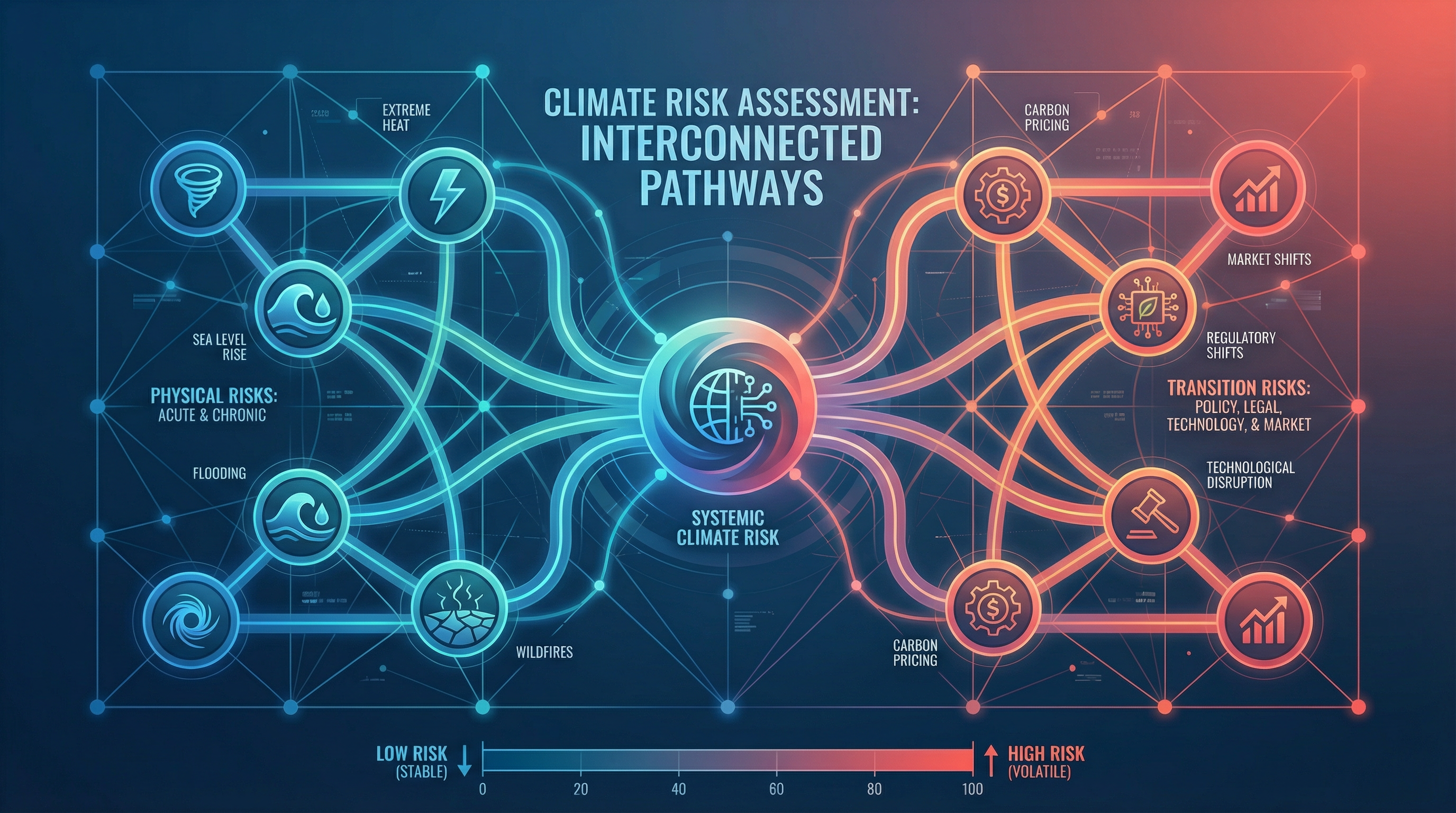
Geoengineering is increasingly being framed as a potential tool for managing climate-related risks. The Task Force on Climate-related Financial Disclosures (TCFD) provides a useful framework for understanding these risks, dividing them into physical risks and transition risks.
Physical Risks
Risks from the physical impacts of climate change itself
Acute Risks
Event-driven: storms, floods, heat waves. SRM could potentially reduce frequency but introduces termination shock risk.
Chronic Risks
Long-term shifts: sea-level rise, temperature changes. CDR addresses root cause but operates too slowly for near-term relief.
Transition Risks
Risks from transitioning to a low-carbon economy
Moral Hazard
Prospect of technological fix could reduce political will for emissions reductions, delaying necessary transition.
Technology & Market Risks
Risk of investing in ineffective or harmful technologies. New vested interests could influence policy against public good.
A New Era of Planetary Security
Linking human and Earth system stability
The prospect of geoengineering marks our entry into an era of planetary security, where the security of nations is inextricably linked to the stability of the Earth's systems. This new security paradigm requires a more holistic and integrated approach to risk assessment, one that considers the complex interplay of human, ecological, technological, and international security.
"The deployment of geoengineering technologies would represent a deliberate intervention in the Earth's climate system on a planetary scale, with implications that could span centuries. This raises profound questions about who has the right to control the Earth's climate and how such decisions should be governed."
The 1.5°C global warming threshold has been breached, marking humanity's entry into climate overshoot. In this context, geoengineering is increasingly presented as a potential emergency remedy. However, current governance systems are unfit to guide the transformations and interactions that planetary security implies. The analytical frameworks needed to examine tensions and trade-offs between different dimensions of planetary security are lacking.
Ethics & Governance
The prospect of geoengineering raises profound ethical, governance, and policy challenges that must be addressed before any large-scale deployment is considered. There is currently no international treaty or institution with a clear mandate to govern geoengineering research or deployment.
Justice & Equity
The benefits and risks of geoengineering are unlikely to be evenly distributed. There is a risk that the Global North could deploy technologies with negative impacts on the Global South.
Intergenerational Equity
Long-term consequences are unknown, and future generations will have to manage the technologies and their potential side effects without having consented to their deployment.
Human-Nature Relationship
Geoengineering represents a significant intervention in Earth's natural systems, raising fundamental questions about humanity's role in managing the planet.
UNESCO Recommendations
- States should introduce legislation to regulate climate engineering
- Research should be based on clear ethical standards and international law
- Transboundary impacts of geoengineering decisions must be considered
- Open and responsible collaboration between all countries is required
- Marginalized communities must be involved in policy decisions
Conclusion
Geoengineering presents a complex and controversial set of potential responses to climate change. While it may offer some tools for managing climate risks, it also introduces a new set of profound risks and challenges that are poorly understood. The potential for geoengineering to undermine efforts to reduce greenhouse gas emissions, exacerbate inequalities, and create new forms of geopolitical conflict is significant.
Before any large-scale deployment of geoengineering is considered, a robust and inclusive global dialogue is needed to address the profound ethical, governance, and security challenges it raises. As UNESCO has warned, the deployment of geoengineering should not come at the expense of commitments made under the Paris Agreement, and not without a clearly established ethical framework.
The world must proceed with extreme caution, prioritizing research to reduce uncertainties and developing strong international governance frameworks to ensure that any decisions about geoengineering are made in the best interests of all humanity.